Let’s dive into the world of small business insurance. If you’re a small business owner, you know that safeguarding your venture is crucial. With so many risks lurking around every corner, ensuring you have the right insurance coverage can be the difference between success and disaster. From protecting your assets to shielding you against lawsuits, commercial insurance is not just a luxury; it’s a necessity.
In this guide, we’ll unravel the complexities of three vital small business insurance policies. Whether you’re a seasoned entrepreneur or just starting, understanding these insurance types will empower you to make informed decisions that protect your business and give you peace of mind. So, let’s get started!
Understanding Small Business Insurance
Did you know that 40% of small businesses never reopen after a disaster? Shocking, right? That’s why understanding commercial insurance is crucial for your business’s survival and growth.
Commercial insurance is your safety net. It protects you from unexpected financial losses stemming from accidents, lawsuits, and natural disasters. Without it, you could face severe financial distress or even shutdown.
The Significance of Commercial Insurance for Small Businesses
Small businesses often operate on tight budgets. One lawsuit could drain your resources faster than you think. Commercial insurance gives you peace of mind by covering legal fees, property damage, and employee-related risks.
Imagine a slip-and-fall accident at your shop. Without insurance, you cover medical bills out of pocket. With insurance? You’re covered. That’s the power of commercial insurance.
Common Insurance Types Needed by Small Businesses
Not all businesses are created equal. But most need these essential insurance types:
- General Liability Insurance: Covers third-party claims of bodily injury and property damage.
- Property Insurance: Protects your business property from fire, theft, and natural disasters.
- Workers’ Compensation: Required if you have employees; it covers medical expenses and lost wages due to work-related injuries.
- Professional Liability Insurance: Shields against claims of negligence or mistakes in your services.
Risks of Operating Without Adequate Insurance
Here’s the deal: operating without adequate insurance is like walking a tightrope without a safety net. Small businesses face numerous risks such as lawsuits, natural disasters, and cyber threats.
One data breach could cost you thousands, if not millions. And that’s just the beginning. Financial ruin isn’t just a possibility—it’s a probable outcome without insurance.
Pro Tip: Always reassess your insurance needs annually to adapt to growth and industry changes.
Components of a Comprehensive Small Business Insurance Policy
A comprehensive policy isn’t about having more. It’s about having the right coverage. This includes:
- Liability Coverage: Protects you against claims from injuries or damages.
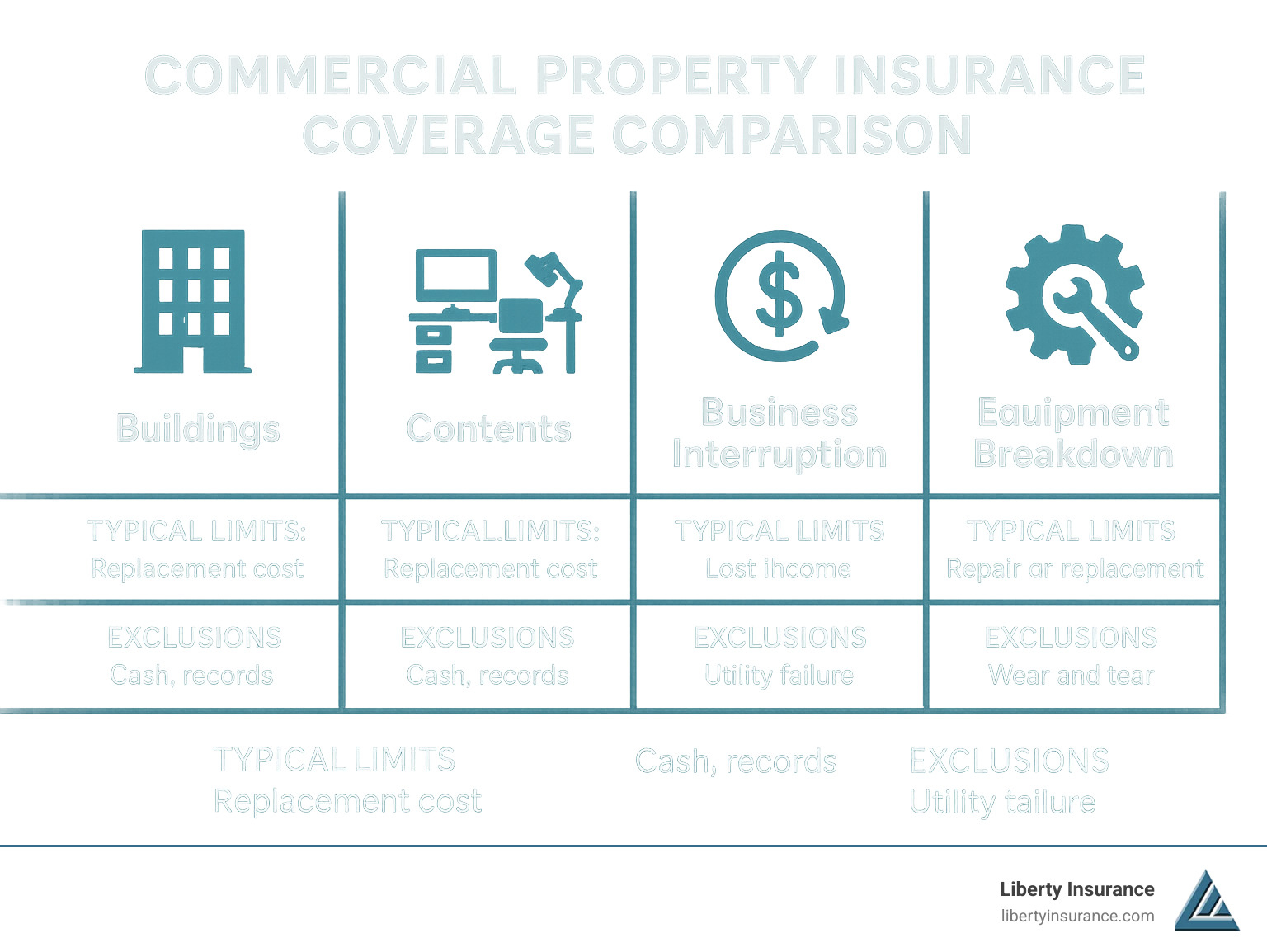
- Property Coverage: Covers your physical assets, like buildings and inventory.
- Business Income Coverage: Helps recover lost income if your business is interrupted due to a covered loss.
- Employee-Related Coverage: Includes workers’ compensation and health insurance options.
These components ensure you’re protected from all angles. Because sometimes a little extra preparation goes a long way.
Types of Commercial Insurance for Small Businesses

Did you know that 40% of small businesses will incur a property or liability loss within ten years? You might think, “That won’t happen to me!” BUT without the right insurance, a single incident can spell disaster.
Here’s the deal: Understanding the types of commercial insurance is key to protecting your business. Let’s dive into three essential kinds: liability insurance, property insurance, and workers’ compensation. These are the backbone of any robust business protection plan.
Liability Insurance: Your First Line of Defense
Liability insurance covers the costs if your business is found responsible for causing harm to others. This includes bodily injuries and property damage. It’s essential because legal fees and medical expenses can skyrocket.
Whether you have a brick-and-mortar store or run an online business, liability insurance ensures you’re not personally footing the bill for unforeseen incidents.
Property Insurance: Shield Your Assets
Property insurance protects your business’s physical assets. Think buildings, equipment, and inventory. If disaster strikes, like a fire or theft, this insurance steps in to cover the loss.
The key is to make sure your coverage matches the value of your assets. Otherwise, you could end up underinsured.
Pro Tip: Regularly update your policy to reflect any major purchases or upgrades to your assets.
Workers’ Compensation: Protect Your Team
Workers’ compensation is a must if you have employees. It covers medical expenses and lost wages if they’re injured on the job. This isn’t just a safety net for employees; it protects you from lawsuits.
You might think you don’t need it with a small team BUT even one accident can lead to costly claims. It’s required by law in most states, so don’t skip it.
Industry-Specific Insurance Options
Beyond the basics, consider industry-specific insurance. If you run an IT firm, cyber liability insurance could save you from data breach nightmares. For a restaurant, spoilage insurance can cover food losses due to power outages.
Different industries face different risks. Tailor your insurance to fit your unique needs.
| Type of Insurance | Coverage | Benefits |
|---|---|---|
| Liability Insurance | Third-party bodily injury, property damage | Protects against lawsuits and medical costs |
| Property Insurance | Buildings, equipment, inventory | Covers physical asset losses |
| Workers’ Compensation | Employee medical expenses, wage replacement | Mandatory coverage; protects against employee lawsuits |
Cost Factors and Budgeting for Insurance
Did you know that 40% of small businesses never reopen after a disaster? That’s why understanding insurance costs is crucial for your business survival. Let’s dive into what affects your insurance rates and how you can keep them in check.
Insurance costs can vary significantly depending on several factors. These include the size and nature of your business, the industry you’re in, and even your location. Here’s the deal: knowing these factors can help you budget effectively and ensure you’re not overpaying.
Factors Influencing Insurance Costs
First off, the type of business you run has a huge impact. A construction company will likely pay more than a small boutique. Why? The risk level is higher. If you’re in a high-risk industry, expect to pay more. Next, your claims history also plays a role. Frequent claims can spike your rates. BUT if you’ve been claim-free, you could snag discounts.
How to Budget for Commercial Insurance
Budgeting for insurance is not rocket science. Start by determining your coverage needs. Do you need general liability, or is workers’ comp a priority? Next, get quotes from multiple providers. This will give you a ballpark figure to work with. Pro Tip: Always compare at least three quotes before making a decision.
Shopping around can save you up to 30% on insurance premiums.
Methods for Reducing Insurance Premiums
Reducing premiums is easier than you might think. Implementing risk management strategies can lead to discounts. For instance, installing a security system or investing in employee training programs can lower your risk profile. Also, consider raising your deductible. BUT remember, this means you’ll pay more out-of-pocket in case of a claim.
Cost Comparison Table
To make things easier, here’s a cost comparison table illustrating different budget options based on coverage needs.
| Coverage Type | Low Coverage Cost | Medium Coverage Cost | High Coverage Cost |
|---|---|---|---|
| General Liability | $500 | $750 | $1,000 |
| Workers’ Compensation | $800 | $1,200 | $1,500 |
| Professional Liability | $300 | $600 | $900 |
Selecting the Right Insurance Provider
Picking an insurance provider is like choosing a business partner. A wrong decision could cost you greatly, while the right choice secures your business’s future.
So, how do you choose the right insurance provider? It’s all about credibility, reliability, and negotiating the best terms.
Criteria for Selecting a Reputable Insurance Provider
First, look at financial stability. You want an insurer that can pay out claims when disaster strikes. Next, check their track record. Do they have a history of positive reviews and client satisfaction? Lastly, consider their product offerings. A provider with a variety of options can tailor insurance to fit your business like a glove.
Evaluating Credibility and Reliability
You wouldn’t buy a car without looking under the hood, right? The same goes for insurance providers. Examine their ratings from agencies like A.M. Best or Moody’s. But here is the deal: Ratings are just one piece of the puzzle. Speak with other business owners. Real-world feedback can reveal insights you won’t find online.
Negotiating Terms with Insurance Companies
You’ve found a potential provider. Great! BUT don’t just sign on the dotted line. Negotiation is key. Discuss the terms and premiums in detail. Are there discounts for bundled policies? What about deductibles? Here’s your chance to save some money.
Steps to Choose the Right Insurance Provider:
- Assess financial stability using ratings.
- Review client feedback and testimonials.
- Examine their range of insurance products.
- Negotiate terms for better premiums and coverage.
Pro Tip: Always ask for sample policies. This gives you a clear picture of coverage limits and exclusions before committing.
Legal and Compliance Aspects of Business Insurance
Did you know that failing to comply with business insurance regulations can lead to hefty fines or even business shutdowns? If you’re running a small business, understanding the legal landscape of insurance is crucial to keep your business safe and thriving.
Here is the deal: Each region has its own legal requirements for business insurance. Navigating these can be tricky, especially if you’re expanding your operations across borders. It’s essential to be fully compliant to avoid any legal pitfalls.
Understanding Regional Legal Requirements
In some regions, having workers’ compensation insurance is not just a good idea—it’s a legal requirement. Meanwhile, other places might mandate liability insurance if you’re in a high-risk industry. Keeping up with these regional differences is key to staying compliant.
- Check local laws for mandatory insurance types.
- Review industry-specific insurance regulations.
- Consult with a legal expert familiar with your region.
Compliance Issues Related to Small Business Insurance
Many small business owners underestimate the importance of insurance compliance. But non-compliance can lead to legal actions, which can be costly and damaging. Compliance is not just about avoiding penalties; it’s about protecting your livelihood.
Insurance audits can catch gaps in compliance. These audits examine your policies to ensure they meet the necessary legal standards. Regular audits can prevent future headaches.
Consequences of Non-Compliance with Insurance Regulations
Non-compliance isn’t just a slap on the wrist. It can mean fines, legal fees, and, in severe cases, business closure. Worse yet, if an incident occurs and you’re underinsured, you may face lawsuits without the safety net of adequate coverage.
Your best defense against non-compliance consequences is proactive management and regular consultation with insurance professionals.
- Hefty fines for non-compliance.
- Potential lawsuits if incidents occur.
- Reputational damage from being uninsured.
Future Trends in Business Insurance
Did you know that 75% of small businesses are underinsured? That’s right. And as the landscape of business insurance evolves, staying ahead of the curve is crucial.
The world of business insurance is rapidly changing, with new trends emerging that could redefine how small businesses protect themselves. From leveraging technology to adapting to shifting market dynamics, these trends are shaping the future of insurance policies.
The Rise of Customized Insurance Solutions
Cookie-cutter policies are out. Today, businesses crave customized insurance solutions tailored to their unique needs. Insurers are using big data and AI to develop bespoke coverage options that fit like a glove. Imagine having an insurance policy that’s as unique as your fingerprint. That’s where we’re heading.
Technology’s Transformative Impact
Technology isn’t just influencing insurance—it’s revolutionizing it. Digital platforms are making it easier and faster for small businesses to get coverage. Here is the deal: if you’re not using tech-based insurance solutions, you’re missing out on speed and efficiency. From AI to blockchain, these technologies are streamlining processes and reducing paperwork.
Opportunities and Challenges Ahead
The future holds both promise and pitfalls for small business insurance. Opportunities abound with the rise of Insurtech startups offering innovative solutions. But challenges like cybersecurity threats and regulatory changes are also on the horizon. How you navigate these can make or break your business.
Pro Tip: Stay informed on regulatory changes. They can have a massive impact on your insurance coverage and premiums.
Digital Platforms: The New Insurance Brokers
Gone are the days when you needed an in-person broker to get insured. Digital platforms are the new norm, offering a seamless and user-friendly experience. They’re transforming how small businesses access insurance services, making it as easy as a few clicks. This shift is flattening the playing field, allowing even the smallest enterprises to get the best coverage.
Last Word
As we conclude our exploration of small business insurance, it’s clear that choosing the right policies could be a make-or-break decision for your enterprise. By investing in comprehensive coverage, you’re not only protecting your business but also setting the stage for long-term success. Don’t leave your business’s future to chance—equip it with the protection it deserves.
FAQ Section
What are the three essential types of commercial insurance for small businesses?
The three essential types of commercial insurance are liability insurance, property insurance, and workers’ compensation insurance.
Why is commercial insurance important for small businesses?
Commercial insurance is crucial for small businesses as it protects against unforeseen events that could lead to significant financial losses, such as lawsuits, property damage, or employee injuries.
How can small businesses reduce their insurance premiums?
Small businesses can reduce insurance premiums by bundling policies, implementing safety measures, maintaining a good credit score, and shopping around for the best rates.
What factors influence the cost of small business insurance?
Factors influencing the cost include the type of business, location, number of employees, claims history, and coverage limits.
How do I choose the right insurance provider for my small business?
Evaluate providers based on reputation, customer service, coverage options, and pricing. It’s also important to read reviews and get recommendations from other business owners.
