Imagine running a successful business, only to be hit with a lawsuit that questions the very foundation of your professional service. Sounds like a nightmare, right? Enter Errors and Omissions Insurance, your ultimate safeguard against the unpredictable world of professional liability. This insurance acts as a protective shield, ensuring that even if mistakes happen, your business remains unscathed by financial disasters.
In Washington State, the history of Errors and Omissions Insurance is as dynamic as the industries it protects. From legal giants to tech startups, this insurance has evolved to cater to a varied professional landscape. So, if you’re a professional in Washington State, understanding the nuances of this vital coverage is not just beneficial—it’s essential.
Overview of Errors and Omissions Insurance
Did you know that a single lawsuit can cost a business up to $50,000 just in legal fees? That’s where Errors and Omissions (E&O) Insurance comes in. This type of insurance is your safety net against mistakes that could cost you big time.
Errors and Omissions Insurance is designed to protect professionals from claims of negligence or inadequate work. In simple terms, it covers you when you mess up. Whether you’re an architect, consultant, or IT specialist, having E&O insurance protects your business from financial ruin.
Historical Background of Errors and Omissions Insurance in Washington State
Errors and Omissions Insurance has been around in Washington State for decades. It gained popularity in the 1980s when the professional services industry started booming. Since then, it’s become essential for businesses that provide any form of advice or services.
Professions That Require Errors and Omissions Insurance
In Washington State, E&O insurance isn’t just for lawyers or doctors. It’s crucial for real estate agents, accountants, and even marketing consultants. If your job involves providing professional advice or services, you need this coverage.
Here’s the deal: If you’re in a profession where the stakes are high, you can’t afford to skip E&O insurance. Having it means that even if a client sues you for an alleged mistake, you’re covered.
Key Features of Different Errors and Omissions Policies
Understanding the features of E&O policies can save you from future headaches. Let’s break it down:
| Feature | Basic Policy | Premium Policy |
|---|---|---|
| Coverage Limit | $1 million | $5 million |
| Deductible | $1,000 | $500 |
| Legal Defense | Included | Included with premium legal teams |
| Worldwide Coverage | No | Yes |
Pro Tip: Always read the fine print. Know what your policy covers and what it doesn’t.
Legal Requirements in Washington State
Did you know that failing to meet the legal requirements for Errors and Omissions Insurance in Washington State can lead to severe penalties? If you’re a professional in Washington, understanding these requirements is non-negotiable.
Washington State has specific regulations that govern Errors and Omissions Insurance to protect both providers and consumers. But what happens if you’re not in compliance with these regulations? Here’s the deal: It can mean fines, legal action, or even losing your license.
Understanding Washington State Regulations
In Washington, the Office of the Insurance Commissioner regulates Errors and Omissions Insurance. This means they set the rules for who needs this coverage and how much they need. The goal is to ensure that consumers are protected from professional mistakes or negligence.
Non-compliance with these regulations can lead to significant financial and reputational damage.
Here is the deal: The state requires that certain professions carry Errors and Omissions Insurance. These include real estate agents, healthcare professionals, and even some tech workers.
Implications of Non-Compliance
Not adhering to the state requirements isn’t just a legal risk. It’s a business risk too. If you’re sued for professional negligence and you don’t have the required insurance, you could be personally liable for damages. That could mean out-of-pocket expenses that could cripple your business.
Pro Tip: Always verify your insurance coverage with a licensed provider to ensure it meets state requirements.
Legal Requirements by Profession
Different professions have different insurance needs. That’s why Washington State provides specific guidelines for each one.
| Profession | Insurance Requirement |
|---|---|
| Real Estate Agents | Mandatory E&O Insurance |
| Healthcare Providers | Minimum Coverage Required |
| Tech Professionals | Varies by Role |
Role of State Authorities
The state authorities are not just rule-makers; they are enforcers too. They ensure compliance by conducting audits and reviewing claims. Their role is to safeguard both the integrity of the profession and the welfare of the consumer. This is why keeping up with state regulations is crucial for any professional.
In summary, understanding and complying with Washington State’s legal requirements for Errors and Omissions Insurance isn’t just smart—it’s essential.
Cost Factors and Pricing
Ever wondered why some businesses pay more for Errors and Omissions Insurance in Washington than others? It’s not just a random number game. Understanding these costs can save you a lot of cash.
The price of E&O insurance isn’t a flat rate. It varies based on a few key factors. If you’ve ever scratched your head at your premium, here’s the deal: insurance companies look at your business size, industry, and even your claims history.
Factors Influencing E&O Insurance Costs
Let’s break down the core factors that influence how much you’ll pay for E&O insurance in Washington:
- Business Size: Larger companies often pay more due to higher risk exposure.
- Industry Type: Some industries, like tech and finance, are considered higher risk.
- Claims History: A clean record can lower your premium, while past claims can make it skyrocket.
- Coverage Limits: Higher coverage limits mean higher premiums.
- Deductibles: Lower deductibles often result in higher premium costs.
Pricing Strategies in Washington State
Insurers in Washington don’t just pull numbers out of thin air. They use specific pricing strategies that you need to know:
- Flat Rate: Some may offer a flat rate for standard coverage, ideal for small businesses.
- Tiered Pricing: Others use tiered pricing, which varies based on coverage and risk levels.
- Customized Quotes: Tailored quotes are provided based on individual business risk assessments.
Premium Costs Across Different Professions
Not all professions are created equal when it comes to E&O insurance costs. Here’s how different professions stack up in Washington:
| Profession | Average Annual Premium |
|---|---|
| Real Estate Agents | $700 – $1,000 |
| IT Consultants | $1,000 – $1,500 |
| Financial Advisors | $1,500 – $2,500 |
Pro Tip: Always compare quotes from multiple insurers. A little research could save you hundreds of dollars annually.
Detailed Breakdown of Pricing Components
Understanding the pricing components can demystify your insurance bill. Here’s what typically goes into calculating your premium:
- Base Rate: The starting point based on industry standards.
- Risk Adjustments: Adjustments made for your specific business risks.
- Coverage Options: Additional riders or coverage options you select.
- Policy Fees: Administrative fees added to the premium.
- Discounts and Credits: Any applicable discounts for safety measures or bundled policies.
Claims Process and Handling
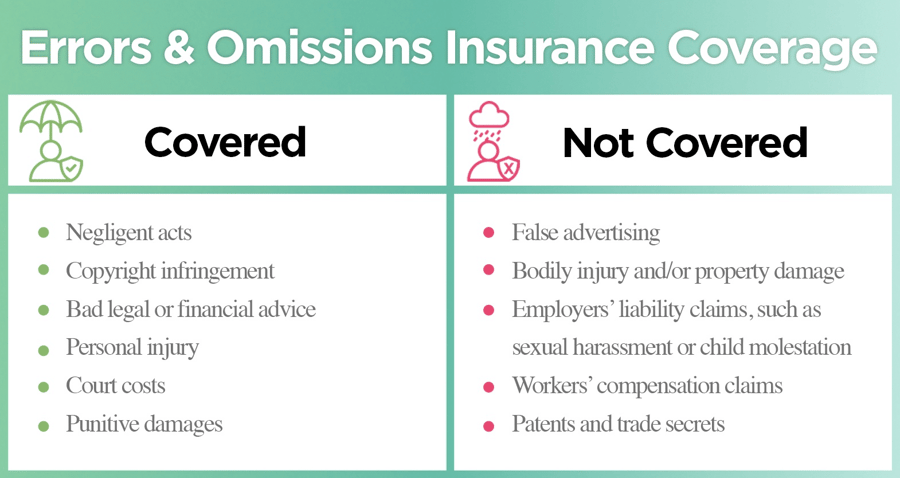
Did you know that nearly 40% of policyholders face challenges when filing for Errors and Omissions Insurance claims? This can make or break your business if not handled correctly. Let’s dig into how you can seamlessly navigate the claims process.
Filing a claim under your Errors and Omissions (E&O) policy doesn’t have to be a nightmare. It all boils down to knowing the right steps to take and understanding what the insurance company needs from you.
Steps to Take When a Claim Arises
When an E&O claim pops up, the first thing you need to do is stay calm. Here is the deal: panicking will only make matters worse. Instead, follow these steps to ensure a smooth process:
- Contact your insurance provider ASAP. The sooner they know, the quicker you can get things moving.
- Gather all relevant documents. This means contracts, emails, and any correspondence related to the claim.
- Write a detailed account of the incident. Be honest and precise—every detail matters.
- Submit everything together. This avoids back-and-forths and speeds up the evaluation.
Pro Tip: Always double-check your policy details to ensure you’re covered for the specific claim you’re facing.
Organizing Your Claim Documentation
Organizing your documentation is key. Imagine the adjuster’s desk overflowing with paper—your file needs to stand out as the most prepared and organized. Here’s how to make that happen:
- Use a digital tool or app to keep everything in one place.
- Label and date every document—chronology helps paint a clearer picture.
- Highlight any key points or sections that are relevant to the claim.
By having a rock-solid system in place, you’ll not only impress the insurance company but also make the process less stressful for yourself.
Common Challenges During the Claims Process
Even if you do everything right, hurdles can pop up. The most common challenge? Delays. Insurance companies require time to investigate thoroughly, but here’s the kicker: you can minimize delays by being proactive. Stay in touch with your insurer and respond promptly to any requests. Another pitfall is miscommunication. Always document every interaction with the insurer to avoid misunderstandings.
Remember, navigating E&O claims doesn’t have to be a daunting task. With the right approach, you can handle it like a pro.
Risk Management and Prevention Strategies
Did you know that more than 20% of small businesses face at least one professional liability claim each year? That’s a staggering number. But here’s the deal: you can reduce your risk by implementing smart strategies.
Errors and omissions (E&O) insurance is your safety net, but it shouldn’t be your only defense. By proactively managing risks, you not only protect your business but also potentially lower your insurance costs.
Strategic Planning for Risk Reduction
To effectively reduce E&O risks, you need a strategic plan. Start with identifying potential pitfalls in your service delivery. Are there steps in your process that often lead to misunderstandings or errors? Once identified, implement checks and balances to minimize these risks. Regularly auditing your processes can reveal weak spots before they become claims.
Effective Risk Management Practices
A solid risk management plan is like having a GPS for your business—guiding you safely past potential hazards. Begin with detailed documentation of all client interactions. This isn’t just about covering yourself; it’s about ensuring clear communication. Training your staff on best practices and updates in regulations can stop errors before they happen.
- Conduct regular training sessions
- Implement a robust review process
- Utilize technology to track client interactions
Benefits of Preventive Measures
Investing in prevention can save you from costly claims down the road. Imagine a scenario where a real estate firm reduced their claims by 30% just by improving their client documentation process.
Pro Tip: Prevention is not just about saving money but also about building trust with your clients.
Comparison of Risk Management Tools
Choosing the right tools can be overwhelming. Let’s break it down with a simple comparison:
| Tool Name | Key Features | Cost | Best For |
|---|---|---|---|
| Tool A | Automated Documentation | $$ | Small Businesses |
| Tool B | Client Interaction Tracking | $$$ | Medium to Large Enterprises |
| Tool C | Comprehensive Risk Analysis | $$$$ | Industries with High E&O Risks |
Case Studies and Real-Life Scenarios

Why do some businesses thrive while others tank when faced with errors and omissions claims? It often comes down to how prepared—and insured—they are. Let’s dive into some real-life cases that underscore the importance of having solid E&O insurance in Washington State.
Errors and omissions insurance has saved countless businesses from financial ruin. But not all policies are created equal. So, let’s explore some compelling case studies that reveal invaluable lessons.
Notable Cases Involving E&O Insurance in Washington
In Washington, one memorable case involved a real estate agent who forgot to disclose a property defect. The oversight led to a $200,000 settlement after the buyer sued. This case highlights the critical importance of thorough disclosure practices.
Another case featured a tech consultant whose software solution failed, causing massive data loss for a client. The settlement hit nearly $500,000, but thanks to their E&O policy, the consultant’s business survived. This drives home a crucial point: without E&O insurance, they would have been bankrupt.
Lessons Learned from Past Insurance Claims and Settlements
So, what can you learn from these cases? First, verify your policy coverage. In both examples, the businesses had comprehensive E&O coverage that absorbed costly settlements. But many companies are underinsured and underestimate the risk.
Next, you should focus on robust risk management strategies. This involves setting up standard procedures to catch potential errors before they become costly claims. Remember, a proactive approach can save you big time.
Pro Tip: Always review your E&O policy annually to ensure it covers new services or expanded operations. This could mean the difference between a minor disruption and a financial disaster.
Hypothetical Scenario and Insurance Outcome
Imagine a marketing firm in Seattle that promises a client a 30% increase in sales through a digital campaign. The campaign underdelivers, and the client sues for lost revenue. Their E&O insurance covers not only the legal fees but also the $100,000 settlement.
This hypothetical shows how E&O insurance can alleviate the financial burden of a failed promise. Having the right coverage ensures that unexpected claims don’t cripple your business.
Takeaway: Real-world cases underscore that E&O insurance is not just an expense; it’s a lifeline. Proper coverage and risk management can save your business from catastrophic losses.
Conclusion
In the bustling world of Washington State professionals, Errors and Omissions Insurance stands out as an indispensable ally. As you navigate the complexities of your industry, remember that this insurance isn’t just a policy—it’s a promise of protection. By understanding its intricacies and adhering to state regulations, you secure peace of mind and ensure your professional journey remains on solid ground. So, gear up, stay informed, and let this insurance fortify your path to success!
Frequently Asked Questions
What is Errors and Omissions Insurance?
Errors and Omissions Insurance is a type of professional liability insurance that protects businesses and individuals against claims of negligence or inadequate work.
Why is Errors and Omissions Insurance important in Washington State?
It is crucial because it helps professionals mitigate financial losses arising from lawsuits, ensuring compliance with state regulations.
What professions commonly require Errors and Omissions Insurance?
Common professions include real estate agents, consultants, lawyers, and IT professionals, among others.
What are the legal requirements for Errors and Omissions Insurance in Washington State?
Requirements vary by profession, but generally include minimum coverage amounts and specific policy terms dictated by state regulations.
How do I file a claim under an Errors and Omissions policy?
To file a claim, notify your insurer immediately, provide detailed documentation of the incident, and cooperate with any investigations.
What factors influence the cost of Errors and Omissions Insurance in Washington?
Factors include the type of profession, coverage limits, claim history, and the insurer’s pricing strategy.
